Azulejo Origins.
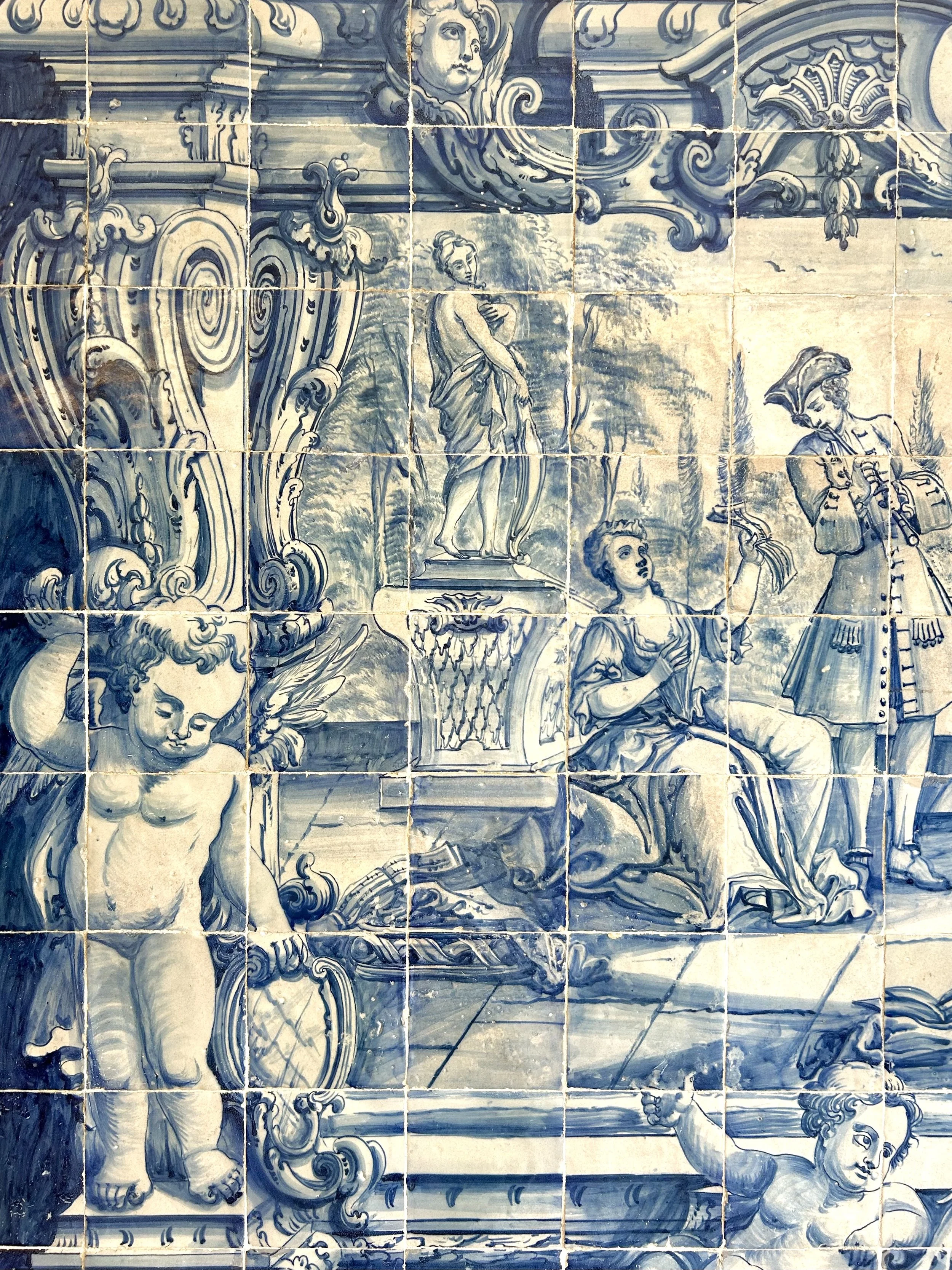
The Portuguese tradition of decorative tiling and mosaics, known as Azulejo, has existed in various forms for thousands of years. One of the earliest examples can be seen at the ancient Roman settlement of Conimbriga, where intricate mosaics, dating back around 2000 years, depict mythological scenes. These are early precursors to the art form that today adorns Portugal’s buildings and streets.
The word Azulejo originates from the Arabic الزليج (al-zillij), meaning “polished stone,” introduced during the Umayyad Caliphate’s rule over the Iberian Peninsula. These rulers sought to emulated Roman and Byzantine mosaics, decorating mosques and palaces with the art form. The most significant surviving examples from this period are in the cities of the Andalusian heartland, the stunning Alhambra in Granada among the most notable.
After the Umayyads were expelled in the early 11th century, the tradition persisted and was later reintroduced to Portugal by King Manuel I following his 1503 visit to the palaces of Seville. The Portuguese elevated the form beyond its Spanish counterpart, embracing the Moorish concept of horror vacui— “fear of empty spaces”—and began fully covering palace walls, such as in Sintra, with colourful geometric designs.
The iconic blue-and-white tiles became popular in the late 17th century, originally imported from Dutch masters in Delft. However, in 1687, King Peter II imposed an embargo on these imports to foster domestic craftsmanship, reduce foreign dependency, and promote national pride, all supported by Portugal’s growing global trade empire.
Azulejos flourished in the late 17th and 18th centuries, becoming a symbol of wealth and status. Lavish tiling began to cover buildings owned by affluent families and businesses, fuelled by Portugal’s vast colonial trade networks—in the far east (Macau, the Philippines and East Timor), the Indian subcontinent (Goa), coastal Africa (Angola and Mozambique) and the New World (Brazil).
In return, the Azulejo tradition was exported to these territories, and its legacy remains visible today across many former Portuguese colonies.
