Diocletian’s Palace, Split.
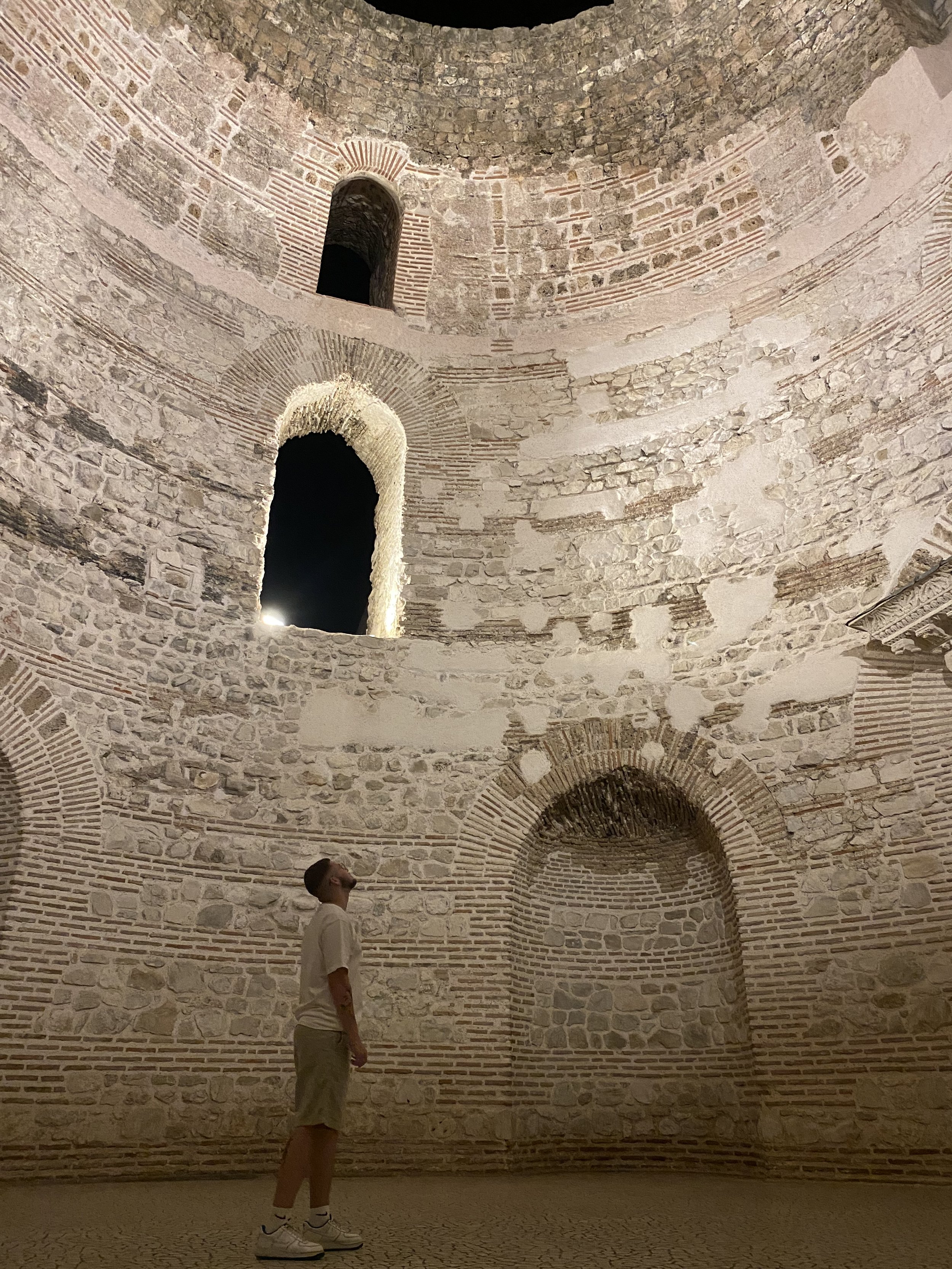
This monumental 7.5 acre site was built at the turn of the 4th century AD by order of the Roman emperor Diocletian to serve as his retirement residence. Over the following centuries the palace evolved to become the core of modern Split encapsulating the majority of the city’s ‘Old Town’ within its towering walls.
The central square called the ‘Peristyle’ fronts the start of Diocletian’s apartments. A valley of marble columns open to crystal blue skies it was built to entertain crowds of visitors and is flanked by Diocletian’s mausoleum (today the Cathedral of Saint Domnius) and the Temple of Jupiter (repurposed as a baptistery in the 6th century).
‘The Vestibule’ marks the entrance to the Emperors private residence, which makes up the harbour facing half of the massive structure, it’s high domed ceiling was once the first section of the ‘Imperial Corridor’. The space is unquestionably awe inspiring, the echoes of today’s tourists and the esteemed visitors of history reverberating off the vaulted heights of the structure.
Following Diocletian’s death in 312AD the palace stayed in Roman Imperial possession until the empires fall in 5th century, its second life beginning in the 7th century following the sack of the neighbouring city of Salona by the Slavs. The fleeing population escaped the roaming hordes and sought refuge in the security of the palaces fortifications from which time the population wove their existence into the fabric of the once majestic halls of residence.
Today you can see the patchwork of over a thousand years of life represented in the winding alleys and porticos of the residences of today’s inhabitants, their stonewalled homes allowing you to look deep into the palaces rich history. As you walk along the roughly cobbled streets, through the remaining domed corridors which make up the city’s tight alleyways and through the colossal city gates you can’t help but imagine vividly what the palace must have looked like at its Imperial peak with all of Romes pomp and ceremonial trappings. As a true and unashamed Roman history nerd this experience was an incredibly powerful one and shot Split to the top of my favourite cities list.
